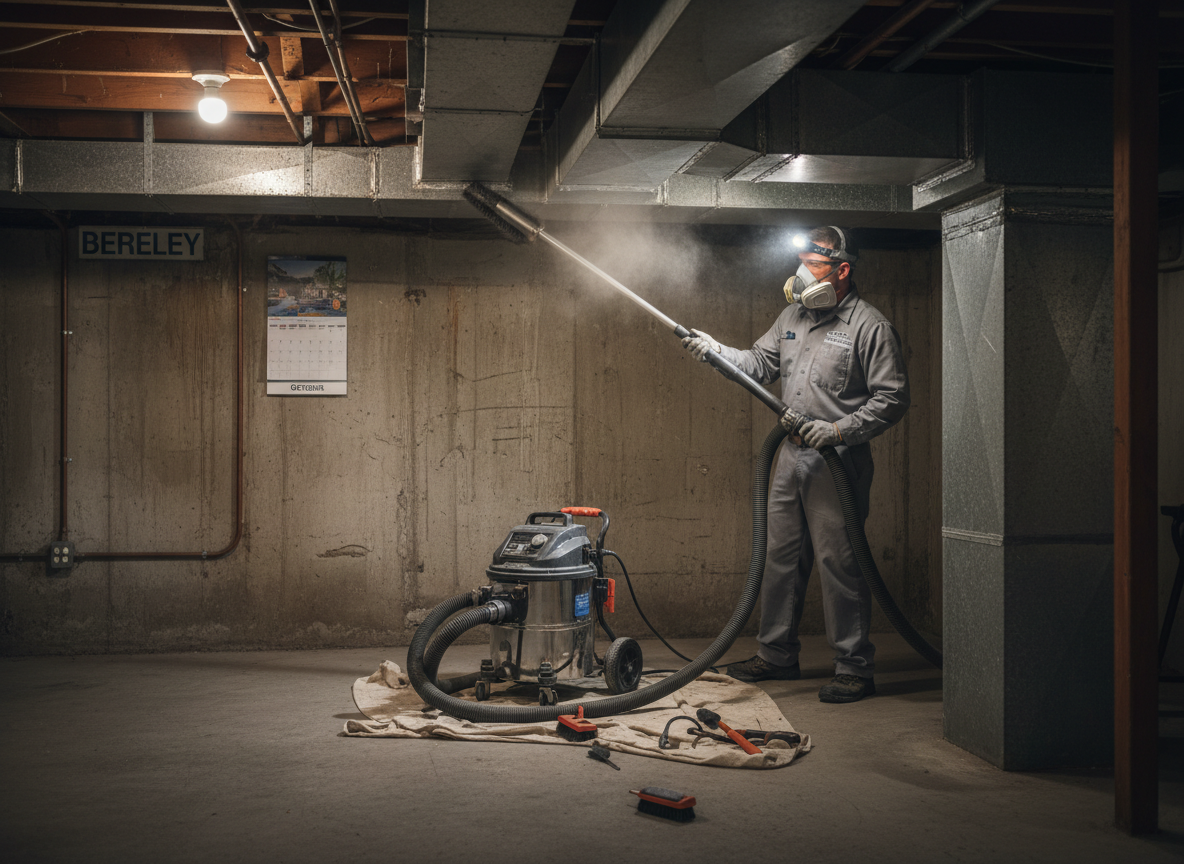
Basements in Berkeley Heights homes built from the 1940s through 1970s often feature low ceilings and exposed duct runs that sit close to concrete slabs. Seasonal humidity from nearby coastal influences and heavy spring rains allows condensation to form inside metal ducts, trapping dust and creating musty odors that travel upstairs. Technicians use negative-pressure equipment sized for these tight spaces to pull out accumulated material without disturbing insulation or wiring common in these older builds.
Access points in Berkeley Township split-levels frequently run through utility rooms or under stairwells, requiring careful disassembly of registers and careful reassembly to maintain original airflow balance. Soil conditions around Snyder Avenue properties can channel water toward foundations during nor'easters, increasing the chance of microbial growth inside ducts that standard whole-house cleanings miss. Proper sealing after cleaning prevents future moisture entry in these below-grade runs.
Homeowners should expect longer setup times when ducts travel through finished basement ceilings, as drop tiles or paneling must be removed and replaced without damage. Equipment is staged at the 295 Snyder Ave location for quick response across Berkeley and surrounding Union County neighborhoods, allowing same-day service when odors or reduced airflow become noticeable after wet weather.
Technician insight
In Berkeley Heights, the thing that catches most people out with basement air duct cleaning is how many 1960s split-levels have return ducts running right along the slab where spring groundwater seeps in, turning a standard cleaning into a moisture remediation job.
Musty Odor After Spring Rains
A Berkeley Heights homeowner reported persistent basement odors after heavy rain. Inspection showed standing moisture and compacted dust in low-slung return ducts along the slab. The team extracted debris under negative pressure, dried the lines, and restored airflow. Odors cleared and the system tested dry on follow-up.
How it works
- 1
Initial Assessment
Technician inspects all accessible basement registers, trunk lines, and returns for visible debris, moisture stains, and restricted airflow.
- 2
Equipment Setup
Negative air machine and agitation tools are positioned at the main trunk to create controlled suction while protecting finished surfaces.
- 3
Cleaning Execution
Rotary brushes and compressed air dislodge material from duct walls; debris is captured in the sealed collection system.
- 4
Final Verification
Registers are reinstalled, airflow is checked at each vent, and the homeowner receives a walkthrough of findings.
Pricing
Pricing varies with duct length, number of access points, and moisture conditions; upfront quotes provided before work begins.