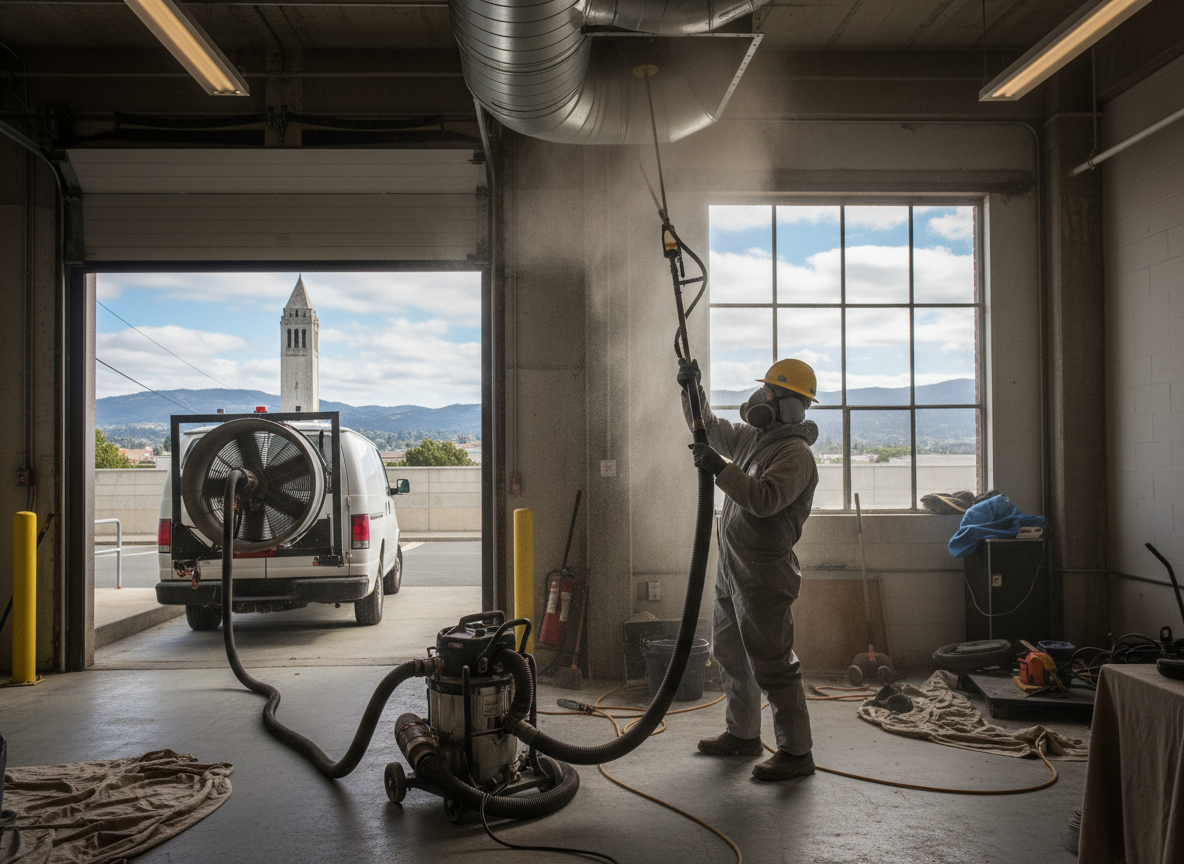
Emergency air duct cleaning in Berkeley Heights often involves older split-level and ranch homes built between the 1950s and 1970s, where original sheet-metal trunks run through crawl spaces and unconditioned attics. When a sudden odor, visible debris, or HVAC failure hits, crews must first isolate the system, then use negative-air machines with HEPA filtration to prevent cross-contamination into living spaces. Flexible duct sections common in these homes can collapse or tear during extraction, requiring on-site repairs before the job finishes.
Winter nor'easters and summer humidity spikes in the Berkeley area drive most emergency calls. Moisture drawn through supply lines during heavy rain can wet accumulated dust and insulation fibers inside the ducts, creating conditions for rapid mold growth within 48 hours. Technicians carry moisture meters and borescopes to check branch runs that standard vacuum tools cannot reach, especially in homes where additions have created long, low-velocity runs that trap debris.
Access points in Berkeley Heights properties are frequently limited to a single return grille or furnace platform, so crews remove and clean registers individually while protecting finished flooring. In two-story colonials near Snyder Avenue, second-floor ducts may route through knee walls, demanding extra time to seal and reopen access panels without damaging drywall. Every job ends with a post-clean airflow test at each register to confirm the system moves air evenly again.
Technician insight
In Berkeley Heights the thing that catches most people out with Emergency Air Duct Cleaning is the number of 1960s and 1970s homes where the original flex duct runs through knee walls and low attics; once those lines collapse or fill with blown-in insulation, a standard vacuum truck cannot restore flow without opening walls.
Collapsed Flex Duct After Heavy Rain
A Berkeley Heights homeowner called after noticing musty air and weak airflow following a nor'easter. Inspection showed water had entered an attic run and soaked the insulation inside a collapsed flex duct. The team isolated the section, replaced the damaged flex, cleaned the remaining metal trunk, and restored even airflow to the second floor.
How it works
- 1
Initial Assessment
Technician arrives, inspects the HVAC system, identifies the source of the emergency, and maps all accessible duct runs.
- 2
Containment Setup
Negative-air machines and sealed barriers are positioned to keep loosened debris from entering living areas during cleaning.
- 3
Mechanical Cleaning
Rotary brushes and compressed-air whips dislodge buildup from trunks, branches, and registers while vacuum collection runs continuously.
- 4
Final Verification
Each register is checked for restored airflow, equipment is reassembled, and the homeowner receives a written summary of findings.
Pricing
Emergency calls are priced by system size, number of stories, and extent of contamination; an upfront quote is provided before work begins.