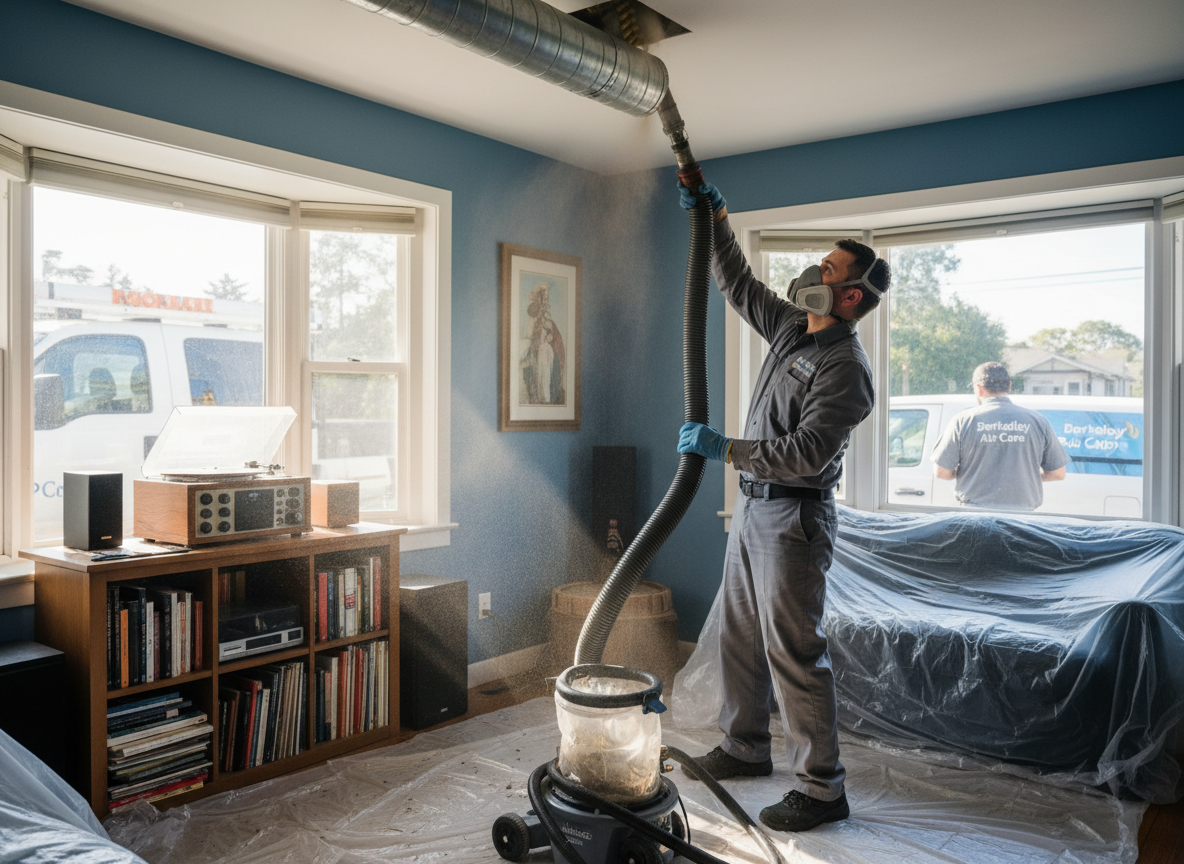
Berkeley Heights features a mix of mid-century ranches and split-level homes whose duct runs often snake through tight basements or low attics. Over time, construction dust, pet dander, and seasonal pollen collect along the sheet-metal seams and at the 90-degree elbows that are common in these layouts. A proper cleaning reaches every branch run rather than stopping at the main trunk, preventing the re-circulation that shows up as uneven room temperatures once the furnace kicks on in fall.
Access points matter in this terrain. Many properties sit on sloped lots where the return plenum sits behind finished walls or under stairwells. Technicians must cut precise access doors, vacuum with negative-air machines rated for the home’s square footage, and reseal every opening to code so insulation and vapor barriers stay intact. Skipping the reseal step lets conditioned air leak into unconditioned spaces, raising energy use during both humid summers and cold snaps.
Residents along Snyder Avenue and adjacent streets often notice musty odors after heavy rain because groundwater seepage can dampen crawl-space ducts. The cleaning process includes a visual inspection with a lighted scope to check for standing moisture or microbial growth before any agitation begins. When moisture is present, the job pauses until the source is addressed so the system dries fully before being returned to service.
Technician insight
In Berkeley Heights the thing that catches most people out with professional air duct cleaning is the number of 1960s and 1970s homes where the return ducts run through finished ceilings with almost no access panels. Once you open the first one you often find the rest of the run blocked by insulation or drywall patches that have to be removed before the vacuum can reach the far branches.
Split-Level Home Near Plainfield Avenue
The homeowner reported weak airflow on the upper level after a wet spring. Scope inspection showed compacted debris at two elbows where the duct crossed the slope of the lot. We cut two new access points, extracted the material, and resealed the openings. Airflow returned evenly and the musty smell disappeared.
How it works
- 1
Initial Assessment
Technician arrives at the Berkeley Heights address, reviews the HVAC layout, and uses a scope camera to document debris levels in the main trunk and branch runs.
- 2
System Isolation
Registers are sealed and the furnace or air handler is isolated so negative pressure can be applied without pulling debris into living spaces.
- 3
Agitation and Extraction
Flexible whips and compressed-air tools loosen buildup while a HEPA-filtered vacuum draws material out through the access points.
- 4
Final Inspection and Reassembly
Every register is checked for remaining debris, access panels are sealed, and the system is returned to normal operation with a written report.
Pricing
Cost depends on number of runs, access difficulty, and whether the home has a finished basement. Upfront quotes provided after the on-site assessment.